
Contents
Echoes in the Sand: Unearthing the Grandeur of Ancient African Civilizations
The narrative of antiquity, as commonly presented, often casts a long shadow over the vast and vibrant continent of Africa, frequently limiting its contributions to the singular splendor of ancient Egypt. This Eurocentric lens has, for centuries, obscured the profound achievements and complex societies that flourished far beyond the fertile banks of the Nile, particularly in the regions south of the Sahara. To truly appreciate the global tapestry of human civilization, one must venture beyond these narrow confines and acknowledge the unsung contributions of sub-Saharan Africa—a realm teeming with sophisticated kingdoms, innovative technologies, and intricate cultural identities that profoundly shaped the ancient world. It is time to challenge these entrenched narratives and bring to light the remarkable grandeur of civilizations whose echoes still resonate in the sands and stones of today.
Kush: The Black Pharaohs and a Legacy of Gold
Emerging as a formidable power to the south of Egypt, the Kingdom of Kush stands as a testament to indigenous African ingenuity and resilience. For millennia, the land of Nubia, straddling present-day Sudan and southern Egypt, served as a crucial bridge between sub-Saharan Africa and the Mediterranean world. Initially influenced by its northern neighbor, Kush eventually asserted its own distinct identity, culminating in the remarkable 25th Dynasty, when Kushite pharaohs ruled over a unified Egypt, earning them the moniker "Black Pharaohs." This period, though relatively short, left an indelible mark, demonstrating the political and military might of an African kingdom that reversed the traditional power dynamic.
Following their withdrawal from Egypt, the Kushites established the Meroitic Empire, a vibrant civilization centered around the city of Meroë. This era, from approximately 300 BCE to 350 CE, marked a period of immense prosperity and cultural flourishing. Meroë became renowned as an ancient industrial powerhouse, particularly for its advancements in iron production. Vast slag heaps found at the site attest to an extensive iron smelting industry, making the Meroites pioneers in this technology within Africa, long before many European societies. This mastery of iron, coupled with sophisticated agricultural practices, fueled a robust economy. The Meroitic kingdom thrived on extensive trade networks, exchanging gold, iron, ivory, and exotic animals for goods from Egypt, the Roman Empire, and even distant India, establishing itself as a vital node in the ancient world’s commercial arteries.
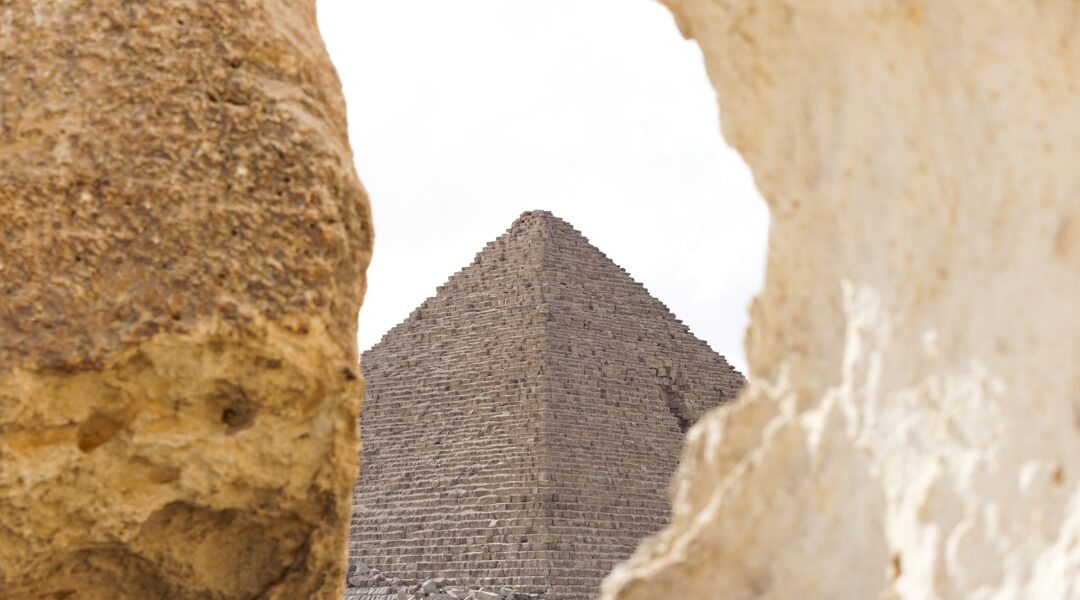
A striking and unique aspect of Kushite civilization is its architectural legacy: the Nubian Pyramids. While sharing the general form with their Egyptian counterparts, these pyramids possess distinct characteristics—smaller in base, steeper in angle, and often topped with a flat mastaba-like structure. Clustered in royal necropolises such as Meroë, Nuri, and El-Kurru, these structures served as the elaborate burial sites for Kushite kings and queens. Far from being mere imitations, these pyramids represent a profound indigenous architectural tradition, reflecting a unique blend of religious beliefs and royal symbolism that endured for centuries, long after pyramid construction ceased in Egypt.
Axum: A Crossroads of Continents and Cultures
To the east, nestled in the highlands of what is now Ethiopia and Eritrea, rose the powerful Kingdom of Axum. From the 1st to the 7th century CE, Axum emerged as a dominant force in the Horn of Africa, strategically positioned at the crossroads of major trade routes connecting Africa, the Arabian Peninsula, and the Indian subcontinent. This strategic location allowed Axum to flourish as an economic and political powerhouse, controlling crucial maritime trade in gold, ivory, spices, and exotic goods across the Red Sea. Its port city of Adulis was a bustling international entrepôt, facilitating contact and cultural exchange that enriched the Axumite civilization.
The rise of Axum was marked by its monumental architecture, most notably the towering monolithic stelae, or obelisks, that punctuate the ancient city of Axum. Carved from single blocks of granite, some reaching over 30 meters in height, these intricately decorated stelae served as grave markers for Axumite royalty and nobility, symbolizing their wealth, power, and connection to the divine. The conversion of Axum to Christianity in the 4th century CE under King Ezana was a pivotal moment, making it one of the first states in the world to officially adopt the new faith. This established the Ethiopian Orthodox Tewahedo Church, a unique branch of Christianity that has profoundly shaped Ethiopian identity and culture for over 1,600 years.
Axum’s cultural legacy extends to its unique writing system, Ge’ez, an ancient South Semitic script that is one of the oldest continuously used alphabets in Africa. It remains the liturgical language of the Ethiopian Orthodox Church and the basis for modern Amharic. Perhaps one of the most enduring and captivating aspects of Axumite heritage is its deep connection to the legend of the Ark of the Covenant. According to Ethiopian tradition, the Ark, containing the Tablets of Law given to Moses, was brought to Axum and is housed in the Church of Our Lady Mary of Zion. While its historical veracity remains a subject of scholarly debate, the belief in the Ark’s presence in Axum is a cornerstone of Ethiopian cultural and religious identity, imbuing the ancient city with an almost sacred aura that continues to draw pilgrims and fascinate researchers.
Great Zimbabwe: Stonework, Society, and Secrecy
Far to the south, amidst the undulating landscapes of modern-day Zimbabwe, lies the awe-inspiring archaeological site of Great Zimbabwe. This vast complex of stone ruins, built between the 11th and 15th centuries CE, stands as the capital of a powerful and wealthy indigenous kingdom, challenging colonial-era assertions that such sophisticated structures could only have been built by non-African civilizations. Great Zimbabwe is a monumental testament to the architectural prowess and complex societal organization of pre-colonial African people.
The enigmatic city is characterized by its remarkable dry-stone masonry, where massive granite blocks were meticulously stacked without the use of mortar to create towering walls, intricate passageways, and impressive enclosures. The most prominent features include the Hill Complex, believed to be the royal residence and a spiritual center; the Valley Enclosure, a series of living quarters and workshops; and the iconic Great Enclosure, with its massive outer wall reaching up to 11 meters high and its enigmatic Conical Tower. The sheer scale, precision, and artistry of this stonework reveal an advanced understanding of engineering and a highly organized labor force. The absence of mortar, far from indicating primitivity, speaks to a sophisticated and enduring building technique perfectly adapted to its environment.
Great Zimbabwe was not merely a ceremonial center but a thriving metropolis that served as the heart of a vast trading empire. Archaeological evidence, including imported pottery, glass beads, and Chinese celadon, indicates extensive trade networks that connected the kingdom with the Swahili coast and, through it, to Arabia, Persia, India, and even China. This wealth, primarily derived from gold and ivory extraction, supported a hierarchical society with a powerful ruling elite. The social structures, inferred from the layout of the city and the distribution of artifacts, suggest a highly stratified society with specialized crafts and administrative functions. Unraveling the secrets of Great Zimbabwe continues to provide invaluable insights into the political, economic, and social complexities of a pre-colonial African civilization that flourished autonomously, leaving behind a legacy of stone that speaks volumes of its grandeur and ingenuity.
No comments yet
Be the first to share your thoughts on this post.